
Lab Result: Wolverine 20mg
- Lab:
- Freedom Diagnostics
- Avg. Purity:
- 99.72%
- Avg. Mass:
- 19.29mg
- Result Date:
- October 24, 2026
- Search Code:
- Aven2610230114
- Lot:
- AWO-020
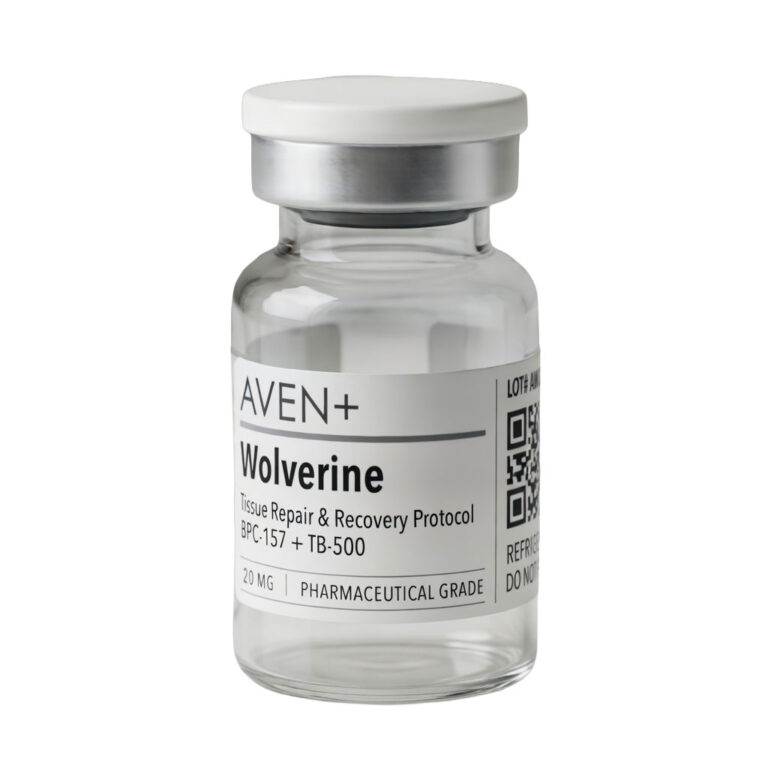
WOLVERINE is a dual-peptide research blend that combines BPC-157 and TB-500 (Thymosin Beta-4 fragment)—two well-studied peptides known for their complementary roles in tissue repair, angiogenesis, cytoskeletal regulation, and regenerative signaling. Together, they are used in preclinical and experimental models to explore multi-pathway cellular recovery and regeneration.
1. Multi-Pathway Tissue Repair Support
WOLVERINE brings together two peptides that act on distinct yet interconnected repair mechanisms:
BPC-157 supports nitric oxide balance and growth-factor–related signaling involved in tissue protection.
TB-500 regulates actin dynamics and cytoskeletal remodeling essential for repair.
This combination allows researchers to study coordinated tissue recovery rather than isolated repair pathways.
2. Enhanced Angiogenic Signaling
Both peptides are studied for their influence on angiogenesis, the formation of new blood vessels. Proper vascular support is critical for delivering oxygen and nutrients to recovering tissues, making WOLVERINE valuable in research examining vascular adaptation during regeneration.
3. Cytoskeletal Organization and Cell Migration
TB-500’s regulation of actin polymerization supports cell motility and structural reorganization, while BPC-157 contributes to cellular stability during stress. Together, they enable investigation into directed cell migration and tissue remodeling, key components of wound repair.
4. Supports Musculoskeletal and Connective Tissue Research
WOLVERINE is commonly referenced in studies focused on muscle fibers, tendons, ligaments, and soft tissue, where coordinated signaling between growth factors, cytoskeletal elements, and vascular support is essential for recovery following mechanical stress.
5. Modulation of Inflammatory and Stress Responses
Balanced inflammation is necessary for proper healing. BPC-157 is studied for its role in inflammatory signaling modulation, while TB-500 supports orderly repair processes. This makes WOLVERINE useful in research exploring controlled inflammatory environments during regeneration.
6. Extracellular Matrix (ECM) Remodeling
Effective tissue repair requires adaptation of the extracellular matrix. Through growth-factor signaling and cytoskeletal regulation, WOLVERINE supports experimental models examining ECM turnover, structural integrity, and tissue resilience.
7. Synergistic Regenerative Research Design
One of WOLVERINE’s primary advantages is synergy. By combining peptides that act on vascular, cellular, and structural pathways, researchers can explore systems-level regeneration, gaining insights into how multiple repair mechanisms interact in real biological environments.
8. Useful in Wound and Recovery Models
WOLVERINE is frequently used in wound-healing and recovery research, where cell migration, angiogenesis, and cytoskeletal dynamics must occur in a coordinated manner for successful tissue restoration.
9. Broad Applicability Across Tissue Types
Unlike highly specialized compounds, WOLVERINE is studied across a wide range of tissues, making it suitable for whole-system regenerative models rather than organ-specific investigations alone.
10. Valuable Tool in Advanced Peptide Research
WOLVERINE enables research into:
Peptide synergy and interaction
Regenerative signaling networks
Cellular recovery under stress
Coordinated tissue remodeling mechanisms
Its dual-peptide design supports complex biological modeling beyond single-target approaches.
Summary
In research settings, WOLVERINE is valued for its potential benefits related to cellular repair, angiogenesis, cytoskeletal organization, inflammation modulation, extracellular matrix remodeling, and musculoskeletal recovery signaling. By combining BPC-157 and TB-500, WOLVERINE provides a powerful platform for studying integrated regenerative biology and peptide-mediated cellular recovery mechanisms.
Only logged in customers who have purchased this product may leave a review.
Lyophilized (freeze-dried) peptides should be stored in a refrigerator at 2–8°C (36–46°F). For long-term storage, they should be kept in a freezer at -20°C (-4°F) or below. Once reconstituted, peptides must be stored in a refrigerator at 2–8°C (36–46°F) and should not be left at room temperature for extended periods.
Add 2mL of bacteriostatic water to get a solution that is 5mg/mL of EACH BPC-157 and TB-500, and every 0.1mL (10 units on an insulin syringe) will be equal to 500mcg of EACH BPC-157 and TB-500.
WOLVERINE is a dual-peptide research blend that combines BPC-157 and TB-500 (Thymosin Beta-4 fragment)—two well-studied peptides known for their complementary roles in tissue repair, angiogenesis, cytoskeletal regulation, and regenerative signaling. Together, they are used in preclinical and experimental models to explore multi-pathway cellular recovery and regeneration.
1. Multi-Pathway Tissue Repair Support
WOLVERINE brings together two peptides that act on distinct yet interconnected repair mechanisms:
BPC-157 supports nitric oxide balance and growth-factor–related signaling involved in tissue protection.
TB-500 regulates actin dynamics and cytoskeletal remodeling essential for repair.
This combination allows researchers to study coordinated tissue recovery rather than isolated repair pathways.
2. Enhanced Angiogenic Signaling
Both peptides are studied for their influence on angiogenesis, the formation of new blood vessels. Proper vascular support is critical for delivering oxygen and nutrients to recovering tissues, making WOLVERINE valuable in research examining vascular adaptation during regeneration.
3. Cytoskeletal Organization and Cell Migration
TB-500’s regulation of actin polymerization supports cell motility and structural reorganization, while BPC-157 contributes to cellular stability during stress. Together, they enable investigation into directed cell migration and tissue remodeling, key components of wound repair.
4. Supports Musculoskeletal and Connective Tissue Research
WOLVERINE is commonly referenced in studies focused on muscle fibers, tendons, ligaments, and soft tissue, where coordinated signaling between growth factors, cytoskeletal elements, and vascular support is essential for recovery following mechanical stress.
5. Modulation of Inflammatory and Stress Responses
Balanced inflammation is necessary for proper healing. BPC-157 is studied for its role in inflammatory signaling modulation, while TB-500 supports orderly repair processes. This makes WOLVERINE useful in research exploring controlled inflammatory environments during regeneration.
6. Extracellular Matrix (ECM) Remodeling
Effective tissue repair requires adaptation of the extracellular matrix. Through growth-factor signaling and cytoskeletal regulation, WOLVERINE supports experimental models examining ECM turnover, structural integrity, and tissue resilience.
7. Synergistic Regenerative Research Design
One of WOLVERINE’s primary advantages is synergy. By combining peptides that act on vascular, cellular, and structural pathways, researchers can explore systems-level regeneration, gaining insights into how multiple repair mechanisms interact in real biological environments.
8. Useful in Wound and Recovery Models
WOLVERINE is frequently used in wound-healing and recovery research, where cell migration, angiogenesis, and cytoskeletal dynamics must occur in a coordinated manner for successful tissue restoration.
9. Broad Applicability Across Tissue Types
Unlike highly specialized compounds, WOLVERINE is studied across a wide range of tissues, making it suitable for whole-system regenerative models rather than organ-specific investigations alone.
10. Valuable Tool in Advanced Peptide Research
WOLVERINE enables research into:
Peptide synergy and interaction
Regenerative signaling networks
Cellular recovery under stress
Coordinated tissue remodeling mechanisms
Its dual-peptide design supports complex biological modeling beyond single-target approaches.
Summary
In research settings, WOLVERINE is valued for its potential benefits related to cellular repair, angiogenesis, cytoskeletal organization, inflammation modulation, extracellular matrix remodeling, and musculoskeletal recovery signaling. By combining BPC-157 and TB-500, WOLVERINE provides a powerful platform for studying integrated regenerative biology and peptide-mediated cellular recovery mechanisms.

While comparing peptide suppliers for a research project, Aven caught my attention with its emphasis on purity testing and quality control. Those are exactly the details I look for
The product page is easy to navigate, and I found the testing and storage information without much trouble. Clean, straightforward presentation
I was putting together a list of materials for a tissue regeneration research project and came across the Wolverine Stack. Having BPC-157 and TB-500 combined in one product makes the formulation interesting to examine. The quality-control information also gives me specific details to look into before choosing a supplier
I originally started reading about BPC-157 on its own, then became interested in the role of TB-500 in experimental tissue research. Finding both compounds in one blend made me curious about how researchers investigate their different biological pathways. The Wolverine Stack is definitely an interesting formulation to learn more about
When evaluating research peptide products, I usually spend time checking the formulation, laboratory documentation, and supplier quality standards. The Wolverine Stack stood out because it combines two compounds studied in regenerative biology. I especially appreciate that Aven explains its quality-control process instead of relying only on promotional descriptions. Independent verification of the actual batch would still be important to me
Was organizing my research budget and noticed the 1-vial and 10-vial options. Pretty convenient for comparing quantities and costs
Been reading up on BPC-157 and TB-500 lately. Really like how straightforward the product options are. The single-vial option is a nice touch
During my supplier comparison, I wanted more than general claims about premium quality. Aven describes its approach to identity testing, purity verification, and batch traceability. That’s the kind of documentation I’d want to examine closely before selecting research materials
Only logged in customers who have purchased this product may leave a review.
Lyophilized (freeze-dried) peptides should be stored in a refrigerator at 2–8°C (36–46°F). For long-term storage, they should be kept in a freezer at -20°C (-4°F) or below. Once reconstituted, peptides must be stored in a refrigerator at 2–8°C (36–46°F) and should not be left at room temperature for extended periods.
Add 2mL of bacteriostatic water to get a solution that is 5mg/mL of EACH BPC-157 and TB-500, and every 0.1mL (10 units on an insulin syringe) will be equal to 500mcg of EACH BPC-157 and TB-500.

Hudson Callahan (verified owner) –
While comparing peptide suppliers for a research project, Aven caught my attention with its emphasis on purity testing and quality control. Those are exactly the details I look for
Bryce M. (verified owner) –
The product page is easy to navigate, and I found the testing and storage information without much trouble. Clean, straightforward presentation
Riley Blackwell (verified owner) –
I was putting together a list of materials for a tissue regeneration research project and came across the Wolverine Stack. Having BPC-157 and TB-500 combined in one product makes the formulation interesting to examine. The quality-control information also gives me specific details to look into before choosing a supplier
Julian Ashford (verified owner) –
I originally started reading about BPC-157 on its own, then became interested in the role of TB-500 in experimental tissue research. Finding both compounds in one blend made me curious about how researchers investigate their different biological pathways. The Wolverine Stack is definitely an interesting formulation to learn more about
Nolan Crawford (verified owner) –
When evaluating research peptide products, I usually spend time checking the formulation, laboratory documentation, and supplier quality standards. The Wolverine Stack stood out because it combines two compounds studied in regenerative biology. I especially appreciate that Aven explains its quality-control process instead of relying only on promotional descriptions. Independent verification of the actual batch would still be important to me
Travis Kim (verified owner) –
Was organizing my research budget and noticed the 1-vial and 10-vial options. Pretty convenient for comparing quantities and costs
Dominic Fairchild (verified owner) –
Been reading up on BPC-157 and TB-500 lately. Really like how straightforward the product options are. The single-vial option is a nice touch
Keegan Ben (verified owner) –
During my supplier comparison, I wanted more than general claims about premium quality. Aven describes its approach to identity testing, purity verification, and batch traceability. That’s the kind of documentation I’d want to examine closely before selecting research materials