
Lab Result: Retatrutide 10mg
- Lab:
- Freedom Diagnostics
- Avg. Purity:
- 99.96%
- Avg. Mass:
- 13.26mg
- Result Date:
- October 24, 2026
- Search Code:
- Aven2610230158
- Lot:
- ART-010
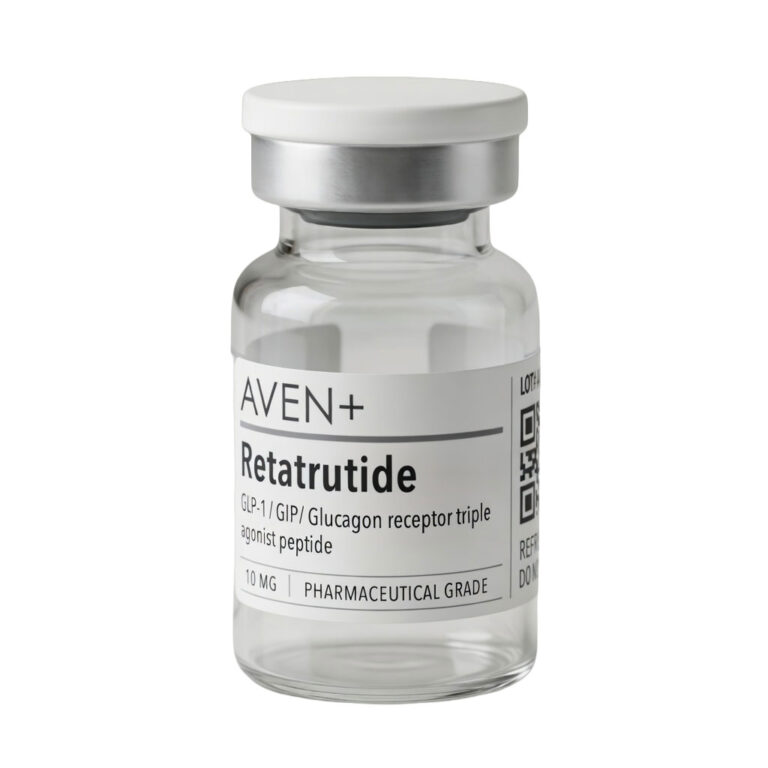
Retatrutide 10 mg is a triple-agonist research peptide developed by Eli Lilly that simultaneously activates the GLP-1, GIP, and glucagon receptors. This lower-dose format is commonly referenced in research models designed to explore early-stage metabolic effects, dose-response dynamics, and balanced pathway activation.
1. Supports Appetite Regulation and Satiety
Through activation of GLP-1 and GIP receptors, Retatrutide 10 mg is studied for its ability to reduce hunger signals and enhance feelings of fullness. These effects are central to research on appetite control, eating behavior, and caloric intake regulation, particularly in early or moderate intervention models.
2. Promotes Glucose and Insulin Balance
Retatrutide supports glucose-dependent insulin signaling, helping regulate post-meal glucose levels in experimental settings. This makes the 10 mg format useful in studies focused on insulin sensitivity, glucose homeostasis, and metabolic efficiency without emphasizing high-intensity stimulation.
3. Activates Energy Expenditure Pathways
By engaging the glucagon receptor, Retatrutide 10 mg is studied for its role in increasing energy expenditure and metabolic activity. This pathway supports research into basal metabolic rate, thermogenic signaling, and energy utilization, even at lower dose levels.
4. Encourages Fat Oxidation and Metabolic Flexibility
The combined incretin and glucagon activity allows Retatrutide 10 mg to be used in models examining fat oxidation and substrate switching. Researchers explore how this balanced activation may support lipid metabolism and adaptive energy use over time.
5. Balanced Multi-Pathway Metabolic Signaling
One of the key benefits of Retatrutide is its triple-agonist mechanism, even at the 10 mg level. This enables the study of integrated metabolic regulation—addressing appetite, glucose control, and energy expenditure together rather than through a single pathway.
6. Useful for Dose-Response and Titration Research
The 10 mg strength is particularly valuable for investigating dose-dependent effects, receptor sensitivity, and signaling thresholds. It is often used in research exploring gradual pathway engagement and metabolic adaptation.
7. Supports Cardiometabolic Research Models
Weight regulation, insulin signaling, and lipid metabolism are interconnected with cardiometabolic health. Retatrutide 10 mg is used in experimental settings examining early metabolic imbalance, insulin resistance pathways, and systemic energy regulation.
8. Key Tool in Next-Generation Metabolic Peptide Research
Retatrutide represents a new class of multi-agonist metabolic peptides. The 10 mg format is especially useful for studying:
Early metabolic signaling responses
Integrated hormone pathway activation
Obesity and diabetes research models
Future peptide-based metabolic strategies
Summary
In research contexts, Retatrutide 10 mg is valued for its potential benefits related to appetite control, glucose regulation, increased energy expenditure, fat oxidation, and balanced multi-pathway metabolic signaling. Its GLP-1, GIP, and glucagon triple-agonist design makes it an important compound for studying dose-sensitive and early-stage metabolic regulation mechanisms.
Only logged in customers who have purchased this product may leave a review.
Lyophilized (freeze-dried) peptides should be stored in a refrigerator at 2–8°C (36–46°F). For long-term storage, they should be kept in a freezer at -20°C (-4°F) or below. Once reconstituted, peptides must be stored in a refrigerator at 2–8°C (36–46°F) and should not be left at room temperature for extended periods.
Add 1mL of bacteriostatic water to get a solution that is 10mg/mL, such that every 0.1mL (10 units on an insulin syringe) is equal to 1mg of Retatrutide.
Retatrutide 10 mg is a triple-agonist research peptide developed by Eli Lilly that simultaneously activates the GLP-1, GIP, and glucagon receptors. This lower-dose format is commonly referenced in research models designed to explore early-stage metabolic effects, dose-response dynamics, and balanced pathway activation.
1. Supports Appetite Regulation and Satiety
Through activation of GLP-1 and GIP receptors, Retatrutide 10 mg is studied for its ability to reduce hunger signals and enhance feelings of fullness. These effects are central to research on appetite control, eating behavior, and caloric intake regulation, particularly in early or moderate intervention models.
2. Promotes Glucose and Insulin Balance
Retatrutide supports glucose-dependent insulin signaling, helping regulate post-meal glucose levels in experimental settings. This makes the 10 mg format useful in studies focused on insulin sensitivity, glucose homeostasis, and metabolic efficiency without emphasizing high-intensity stimulation.
3. Activates Energy Expenditure Pathways
By engaging the glucagon receptor, Retatrutide 10 mg is studied for its role in increasing energy expenditure and metabolic activity. This pathway supports research into basal metabolic rate, thermogenic signaling, and energy utilization, even at lower dose levels.
4. Encourages Fat Oxidation and Metabolic Flexibility
The combined incretin and glucagon activity allows Retatrutide 10 mg to be used in models examining fat oxidation and substrate switching. Researchers explore how this balanced activation may support lipid metabolism and adaptive energy use over time.
5. Balanced Multi-Pathway Metabolic Signaling
One of the key benefits of Retatrutide is its triple-agonist mechanism, even at the 10 mg level. This enables the study of integrated metabolic regulation—addressing appetite, glucose control, and energy expenditure together rather than through a single pathway.
6. Useful for Dose-Response and Titration Research
The 10 mg strength is particularly valuable for investigating dose-dependent effects, receptor sensitivity, and signaling thresholds. It is often used in research exploring gradual pathway engagement and metabolic adaptation.
7. Supports Cardiometabolic Research Models
Weight regulation, insulin signaling, and lipid metabolism are interconnected with cardiometabolic health. Retatrutide 10 mg is used in experimental settings examining early metabolic imbalance, insulin resistance pathways, and systemic energy regulation.
8. Key Tool in Next-Generation Metabolic Peptide Research
Retatrutide represents a new class of multi-agonist metabolic peptides. The 10 mg format is especially useful for studying:
Early metabolic signaling responses
Integrated hormone pathway activation
Obesity and diabetes research models
Future peptide-based metabolic strategies
Summary
In research contexts, Retatrutide 10 mg is valued for its potential benefits related to appetite control, glucose regulation, increased energy expenditure, fat oxidation, and balanced multi-pathway metabolic signaling. Its GLP-1, GIP, and glucagon triple-agonist design makes it an important compound for studying dose-sensitive and early-stage metabolic regulation mechanisms.

A buddy mentioned triple-agonist peptides during a conversation about metabolic health. I’d heard of GLP-1 before, but the glucagon receptor side was new to me. Retatrutide sent me down quite the rabbit hole. Low-key fascinating
Clear vial size, batch details, and a lab report to check out. Nice and tidy, eh?
What interests me about Retatrutide is how much attention triple-agonist therapies have received in metabolic research. While comparing product listings, I came across Aven’s 10mg version and its published laboratory information. The science is worth following, but I think it’s important to distinguish clinical trial findings from claims made about products sold online. I’d rather understand the actual evidence than get swept up in the hype
I came across Retatrutide while reading about GLP-1 research during my lunch break. One article turned into five, and suddenly I was learning about three different hormone receptors. Didn’t expect to get that deep into the science, haha
Three receptors, one molecule. That’s a pretty wild bit of science when you think about it
Not gonna lie, peptide research can get confusing pretty quickly. Having the specifications and testing details together makes the information easier to review. That’s a decent start
The testing date and lot number are easy to find. That’s helpful when reviewing research product information. No fuss
I’ll admit, I didn’t know much about glucagon receptors when I first started reading about Retatrutide. I understood the basics of insulin and appetite regulation, but the energy expenditure side was a whole new subject. After a couple of evenings looking through research articles, I had a much better appreciation for how complicated metabolic regulation really is. Still learning, though!
The 10mg option caught my attention while I was looking into metabolic peptides. Straightforward information and an interesting compound. Pretty neat
Aven lists a 99.96% average purity result for the tested batch. That’s worth examining alongside the full analytical report. A big percentage sounds impressive, but the supporting data matters just as much
Give me the actual specifications and proper testing information over flashy promises any day. Fair enough?
Had a spreadsheet open comparing peptide formulations and their listed quantities. The 10mg format was easy to add to the comparison. Sometimes keeping things simple is the best way to sort through all the options
I started by reading about semaglutide and tirzepatide, then eventually came across Retatrutide. The difference between single, dual, and triple receptor agonists was actually more interesting than I expected. There’s quite a bit of chemistry and physiology packed into the topic
I’ve been following incretin research for a while, mostly because the science keeps evolving. Retatrutide is interesting because it targets GLP-1, GIP, and glucagon receptors in a single molecule. That’s quite a different approach from compounds acting on just one pathway. I’m curious to see how the complete clinical trial results shape our understanding of its benefits and risks
We were discussing how different metabolic receptors interact when Retatrutide came up. What makes it interesting isn’t simply the number of receptors involved, but how their combined activation affects the overall response. There’s a lot to investigate before drawing conclusions about real-world applications
I was comparing research peptide suppliers and wanted to see more than just claims about premium quality. Aven’s Retatrutide listing includes a dated analytical report, batch reference, and measured purity. That gives me something concrete to review. I’d still verify the documentation independently, but it’s a useful starting point.
Rainy Sunday, a fresh coffee, and absolutely no plans. Ended up reading about metabolic hormones for two hours. Retatrutide was one of the more interesting topics I found. Not exactly light weekend reading, but good stuff
While reviewing analytical documentation for research materials, I looked at the stated purity, measured mass, and batch identification. Aven’s listing provides those figures for Retatrutide 10mg. However, analytical purity alone doesn’t establish pharmaceutical quality, clinical safety, or suitability for human administration
Only logged in customers who have purchased this product may leave a review.
Lyophilized (freeze-dried) peptides should be stored in a refrigerator at 2–8°C (36–46°F). For long-term storage, they should be kept in a freezer at -20°C (-4°F) or below. Once reconstituted, peptides must be stored in a refrigerator at 2–8°C (36–46°F) and should not be left at room temperature for extended periods.
Add 1mL of bacteriostatic water to get a solution that is 10mg/mL, such that every 0.1mL (10 units on an insulin syringe) is equal to 1mg of Retatrutide.

Glacier Tobin (verified owner) –
A buddy mentioned triple-agonist peptides during a conversation about metabolic health. I’d heard of GLP-1 before, but the glucagon receptor side was new to me. Retatrutide sent me down quite the rabbit hole. Low-key fascinating
Birchwood Jax (verified owner) –
Clear vial size, batch details, and a lab report to check out. Nice and tidy, eh?
Rylan T. (verified owner) –
What interests me about Retatrutide is how much attention triple-agonist therapies have received in metabolic research. While comparing product listings, I came across Aven’s 10mg version and its published laboratory information. The science is worth following, but I think it’s important to distinguish clinical trial findings from claims made about products sold online. I’d rather understand the actual evidence than get swept up in the hype
Dawson T. (verified owner) –
I came across Retatrutide while reading about GLP-1 research during my lunch break. One article turned into five, and suddenly I was learning about three different hormone receptors. Didn’t expect to get that deep into the science, haha
Zeke N. (verified owner) –
Three receptors, one molecule. That’s a pretty wild bit of science when you think about it
Northern Drew (verified owner) –
Not gonna lie, peptide research can get confusing pretty quickly. Having the specifications and testing details together makes the information easier to review. That’s a decent start
Pacific Trey (verified owner) –
The testing date and lot number are easy to find. That’s helpful when reviewing research product information. No fuss
Coastal Kade (verified owner) –
I’ll admit, I didn’t know much about glucagon receptors when I first started reading about Retatrutide. I understood the basics of insulin and appetite regulation, but the energy expenditure side was a whole new subject. After a couple of evenings looking through research articles, I had a much better appreciation for how complicated metabolic regulation really is. Still learning, though!
Levi Quin (verified owner) –
The 10mg option caught my attention while I was looking into metabolic peptides. Straightforward information and an interesting compound. Pretty neat
Frosty Jace (verified owner) –
Aven lists a 99.96% average purity result for the tested batch. That’s worth examining alongside the full analytical report. A big percentage sounds impressive, but the supporting data matters just as much
Prairie Milo (verified owner) –
Give me the actual specifications and proper testing information over flashy promises any day. Fair enough?
Alpine Brock (verified owner) –
Had a spreadsheet open comparing peptide formulations and their listed quantities. The 10mg format was easy to add to the comparison. Sometimes keeping things simple is the best way to sort through all the options
Timber Nash (verified owner) –
I started by reading about semaglutide and tirzepatide, then eventually came across Retatrutide. The difference between single, dual, and triple receptor agonists was actually more interesting than I expected. There’s quite a bit of chemistry and physiology packed into the topic
Rhett H. (verified owner) –
I’ve been following incretin research for a while, mostly because the science keeps evolving. Retatrutide is interesting because it targets GLP-1, GIP, and glucagon receptors in a single molecule. That’s quite a different approach from compounds acting on just one pathway. I’m curious to see how the complete clinical trial results shape our understanding of its benefits and risks
Yukon Ellis (verified owner) –
We were discussing how different metabolic receptors interact when Retatrutide came up. What makes it interesting isn’t simply the number of receptors involved, but how their combined activation affects the overall response. There’s a lot to investigate before drawing conclusions about real-world applications
Kieran (verified owner) –
I was comparing research peptide suppliers and wanted to see more than just claims about premium quality. Aven’s Retatrutide listing includes a dated analytical report, batch reference, and measured purity. That gives me something concrete to review. I’d still verify the documentation independently, but it’s a useful starting point.
Cedar Knox (verified owner) –
Rainy Sunday, a fresh coffee, and absolutely no plans. Ended up reading about metabolic hormones for two hours. Retatrutide was one of the more interesting topics I found. Not exactly light weekend reading, but good stuff
Rocky Finnley (verified owner) –
While reviewing analytical documentation for research materials, I looked at the stated purity, measured mass, and batch identification. Aven’s listing provides those figures for Retatrutide 10mg. However, analytical purity alone doesn’t establish pharmaceutical quality, clinical safety, or suitability for human administration