
Lab Result: Mots-c 10mg
- Lab:
- Freedom Diagnostics
- Avg. Purity:
- 99.31%
- Avg. Mass:
- 9.72mg
- Result Date:
- October 24, 2026
- Search Code:
- Aven2610230146
- Lot:
- AMO-010
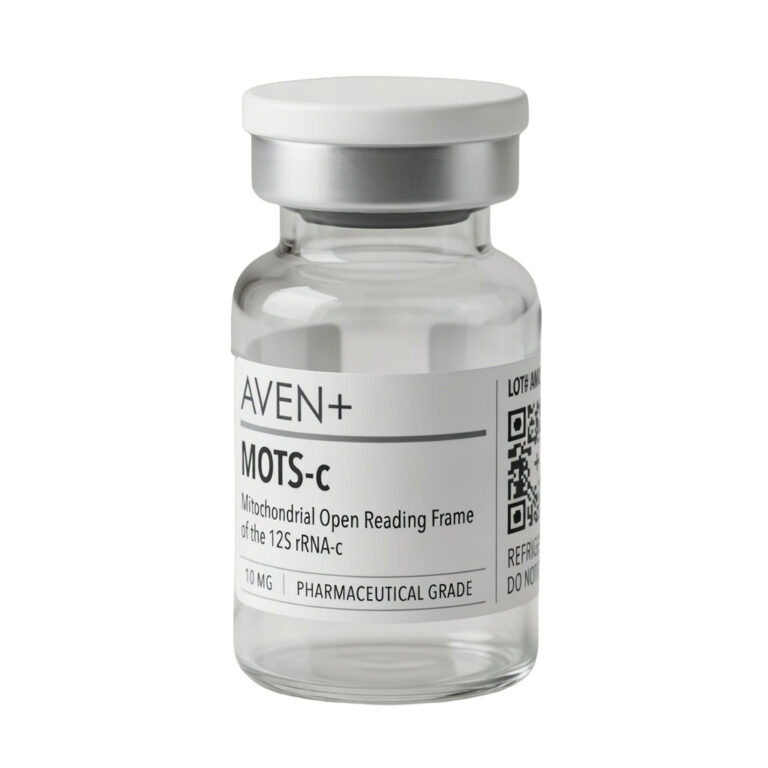
MOTS-c (Mitochondrial Open Reading Frame of the 12S rRNA-c) is a mitochondria-derived research peptide composed of 16 amino acids and encoded within the mitochondrial genome. It has attracted significant interest in preclinical research due to its role in metabolic regulation, mitochondrial signaling, and cellular stress adaptation.
1. Supports Cellular Energy Metabolism
One of the primary benefits of MOTS-c is its role in regulating cellular energy balance. Research indicates that MOTS-c activates AMP-activated protein kinase (AMPK), a master regulator of energy homeostasis that helps cells adapt to low-energy states and metabolic stress.
2. Enhances Mitochondrial Function and Homeostasis
Because MOTS-c originates from mitochondria, it is closely involved in mitochondrial communication with the nucleus. Studies suggest it supports mitochondrial homeostasis, helping cells maintain efficient energy production and metabolic flexibility under challenging conditions.
3. Supports Metabolic Stress Adaptation
MOTS-c has been shown in preclinical models to play a role in cellular adaptation to metabolic stress, such as nutrient limitation or increased energy demand. This makes it a valuable peptide in research exploring resilience mechanisms and metabolic flexibility.
4. Influences Glucose and Lipid Metabolism Pathways
Through AMPK activation and downstream signaling, MOTS-c is studied for its effects on glucose utilization, insulin-related pathways, and lipid metabolism. These properties are particularly relevant in research focused on metabolic health and endocrine signaling.
5. Potential Role in Aging and Longevity Research
Mitochondrial efficiency is closely linked to aging processes. MOTS-c is widely used in aging and longevity research to study how mitochondrial-derived peptides may influence cellular aging, metabolic decline, and stress resistance over time.
6. Supports Nuclear–Mitochondrial Communication Research
MOTS-c is notable for its ability to translocate to the nucleus under stress conditions, where it may influence gene expression related to metabolism and stress response. This makes it an important model compound for studying mitochondrial-to-nuclear signaling (mitokines).
7. Valuable Tool in Exercise and Adaptation Models
Due to its effects on energy regulation and metabolic efficiency, MOTS-c is often studied in experimental models related to physical performance, endurance adaptation, and exercise-induced metabolic changes.
8. Important Research Peptide in Metabolic Biology
Overall, MOTS-c is considered a key research peptide for investigating mitochondrial signaling, metabolic control, stress adaptation, and systems-level energy regulation. Its mitochondrial origin provides unique insights not offered by nuclear-encoded peptides.
Summary
In research settings, MOTS-c is valued for its potential benefits related to energy metabolism, AMPK activation, mitochondrial homeostasis, stress adaptation, and aging biology. Its role as a mitochondrial signaling peptide makes it a powerful tool for advancing understanding of metabolic regulation and mitochondrial-nuclear communication.
Only logged in customers who have purchased this product may leave a review.
Lyophilized (freeze-dried) peptides should be stored in a refrigerator at 2–8°C (36–46°F). For long-term storage, they should be kept in a freezer at -20°C (-4°F) or below. Once reconstituted, peptides must be stored in a refrigerator at 2–8°C (36–46°F) and should not be left at room temperature for extended periods.
Add 1mL of bacteriostatic water to get a solution that is 10mg/mL, such that every 0.1mL (10 units on an insulin syringe) is equal to 1mg of MOTS-C.
MOTS-c (Mitochondrial Open Reading Frame of the 12S rRNA-c) is a mitochondria-derived research peptide composed of 16 amino acids and encoded within the mitochondrial genome. It has attracted significant interest in preclinical research due to its role in metabolic regulation, mitochondrial signaling, and cellular stress adaptation.
1. Supports Cellular Energy Metabolism
One of the primary benefits of MOTS-c is its role in regulating cellular energy balance. Research indicates that MOTS-c activates AMP-activated protein kinase (AMPK), a master regulator of energy homeostasis that helps cells adapt to low-energy states and metabolic stress.
2. Enhances Mitochondrial Function and Homeostasis
Because MOTS-c originates from mitochondria, it is closely involved in mitochondrial communication with the nucleus. Studies suggest it supports mitochondrial homeostasis, helping cells maintain efficient energy production and metabolic flexibility under challenging conditions.
3. Supports Metabolic Stress Adaptation
MOTS-c has been shown in preclinical models to play a role in cellular adaptation to metabolic stress, such as nutrient limitation or increased energy demand. This makes it a valuable peptide in research exploring resilience mechanisms and metabolic flexibility.
4. Influences Glucose and Lipid Metabolism Pathways
Through AMPK activation and downstream signaling, MOTS-c is studied for its effects on glucose utilization, insulin-related pathways, and lipid metabolism. These properties are particularly relevant in research focused on metabolic health and endocrine signaling.
5. Potential Role in Aging and Longevity Research
Mitochondrial efficiency is closely linked to aging processes. MOTS-c is widely used in aging and longevity research to study how mitochondrial-derived peptides may influence cellular aging, metabolic decline, and stress resistance over time.
6. Supports Nuclear–Mitochondrial Communication Research
MOTS-c is notable for its ability to translocate to the nucleus under stress conditions, where it may influence gene expression related to metabolism and stress response. This makes it an important model compound for studying mitochondrial-to-nuclear signaling (mitokines).
7. Valuable Tool in Exercise and Adaptation Models
Due to its effects on energy regulation and metabolic efficiency, MOTS-c is often studied in experimental models related to physical performance, endurance adaptation, and exercise-induced metabolic changes.
8. Important Research Peptide in Metabolic Biology
Overall, MOTS-c is considered a key research peptide for investigating mitochondrial signaling, metabolic control, stress adaptation, and systems-level energy regulation. Its mitochondrial origin provides unique insights not offered by nuclear-encoded peptides.
Summary
In research settings, MOTS-c is valued for its potential benefits related to energy metabolism, AMPK activation, mitochondrial homeostasis, stress adaptation, and aging biology. Its role as a mitochondrial signaling peptide makes it a powerful tool for advancing understanding of metabolic regulation and mitochondrial-nuclear communication.

I was scrolling through an article about cellular energy over my morning coffee and came across MOTS-C. Never realized mitochondria could produce signalling peptides like this. Ended up doing a bit more reading before work. Low-key fascinating stuff
A colleague sent me a paper about mitochondrial-derived peptides, and MOTS-C was one of the compounds discussed. What interested me most was the relationship between mitochondrial signalling and metabolic regulation. It’s a promising area for further investigation, but I wouldn’t assume the findings automatically translate into improved energy or physical performance in humans
MOTS-C is one of those peptides you don’t hear about every day. The mitochondrial connection is pretty cool. Definitely got me curious
During a research discussion about mitochondrial communication, MOTS-C stood out because of its unusual origin within the mitochondrial genome. Its proposed involvement in metabolic signalling makes it an interesting research candidate. I’d want to examine the experimental evidence and analytical documentation carefully before drawing any conclusions
The batch number and testing date are right there. That’s useful information when comparing research suppliers. No need for a bunch of hype
Ten-milligram format, clear product details, and a lab report to look through. Nice and tidy, eh?
The more I read about cellular metabolism, the more I realize how complicated the signalling pathways really are. MOTS-C caught my attention because it’s linked to mitochondrial stress responses and AMPK regulation in experimental research. I also looked into Aven’s published analytical information, including the batch reference and purity results. Those details are useful, but I’d still want to verify the complete laboratory documentation. Better to do the homework than get caught up in the marketing, right?
I’ve been interested in the science behind exercise adaptation for quite a while. Most conversations focus on training and nutrition, but mitochondrial signalling is a whole different topic. MOTS-C came up while I was learning about AMPK pathways. The early research is interesting, although there’s still a big difference between laboratory findings and proven benefits in people
Mitochondria doing more than just making energy? Well, that’s a new rabbit hole for me. Good stuff to learn about
I was sorting through a list of research materials and noticed Aven’s 10mg MOTS-C listing. Having the specifications and analytical information together makes comparing the product with other candidates a bit easier. Pretty handy
Aven’s listed purity result of 99.31% caught my attention. I like seeing an actual batch reference instead of just generic quality claims. Worth checking the full report, though
Had a quiet Sunday planned, but somehow ended up spending half the afternoon reading about mitochondria. MOTS-C popped up in a paper, and suddenly I was learning about metabolic stress responses. Funny how one little peptide can open up such a massive topic. Pretty neat!
Only logged in customers who have purchased this product may leave a review.
Lyophilized (freeze-dried) peptides should be stored in a refrigerator at 2–8°C (36–46°F). For long-term storage, they should be kept in a freezer at -20°C (-4°F) or below. Once reconstituted, peptides must be stored in a refrigerator at 2–8°C (36–46°F) and should not be left at room temperature for extended periods.
Add 1mL of bacteriostatic water to get a solution that is 10mg/mL, such that every 0.1mL (10 units on an insulin syringe) is equal to 1mg of MOTS-C.



AlpineRowan (verified owner) –
I was scrolling through an article about cellular energy over my morning coffee and came across MOTS-C. Never realized mitochondria could produce signalling peptides like this. Ended up doing a bit more reading before work. Low-key fascinating stuff
Frosty Damon (verified owner) –
A colleague sent me a paper about mitochondrial-derived peptides, and MOTS-C was one of the compounds discussed. What interested me most was the relationship between mitochondrial signalling and metabolic regulation. It’s a promising area for further investigation, but I wouldn’t assume the findings automatically translate into improved energy or physical performance in humans
Canuck Sawyer (verified owner) –
MOTS-C is one of those peptides you don’t hear about every day. The mitochondrial connection is pretty cool. Definitely got me curious
Yukon Tanner (verified owner) –
During a research discussion about mitochondrial communication, MOTS-C stood out because of its unusual origin within the mitochondrial genome. Its proposed involvement in metabolic signalling makes it an interesting research candidate. I’d want to examine the experimental evidence and analytical documentation carefully before drawing any conclusions
Timber Asher (verified owner) –
The batch number and testing date are right there. That’s useful information when comparing research suppliers. No need for a bunch of hype
Cedar Nolan (verified owner) –
Ten-milligram format, clear product details, and a lab report to look through. Nice and tidy, eh?
Rocco (verified owner) –
The more I read about cellular metabolism, the more I realize how complicated the signalling pathways really are. MOTS-C caught my attention because it’s linked to mitochondrial stress responses and AMPK regulation in experimental research. I also looked into Aven’s published analytical information, including the batch reference and purity results. Those details are useful, but I’d still want to verify the complete laboratory documentation. Better to do the homework than get caught up in the marketing, right?
Rocky Kellan (verified owner) –
I’ve been interested in the science behind exercise adaptation for quite a while. Most conversations focus on training and nutrition, but mitochondrial signalling is a whole different topic. MOTS-C came up while I was learning about AMPK pathways. The early research is interesting, although there’s still a big difference between laboratory findings and proven benefits in people
NorthernFlynn (verified owner) –
Mitochondria doing more than just making energy? Well, that’s a new rabbit hole for me. Good stuff to learn about
Jensen (verified owner) –
I was sorting through a list of research materials and noticed Aven’s 10mg MOTS-C listing. Having the specifications and analytical information together makes comparing the product with other candidates a bit easier. Pretty handy
Dax M. (verified owner) –
Aven’s listed purity result of 99.31% caught my attention. I like seeing an actual batch reference instead of just generic quality claims. Worth checking the full report, though
Pacific Blaine (verified owner) –
Had a quiet Sunday planned, but somehow ended up spending half the afternoon reading about mitochondria. MOTS-C popped up in a paper, and suddenly I was learning about metabolic stress responses. Funny how one little peptide can open up such a massive topic. Pretty neat!