
Lab Result: KPV 10mg
- Lab:
- Freedom Diagnostics
- Avg. Purity:
- 99.76%
- Avg. Mass:
- 13.33mg
- Result Date:
- October 24, 2026
- Search Code:
- Aven2610230142
- Lot:
- AKP-010
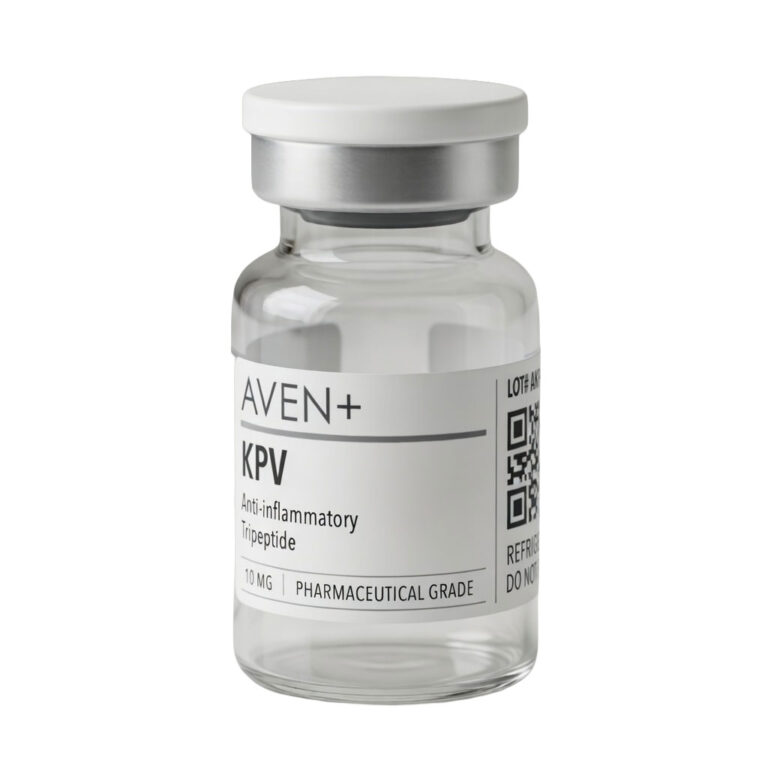
KPV is a tripeptide composed of just three amino acids: Lysine (K) – Proline (P) – Valine (V). It’s derived from the larger peptide hormone alpha-melanocyte-stimulating hormone (α-MSH), a key regulator in immune and inflammatory responses.
1. Gut Health & Inflammation
2. Skin Repair & Wound Healing
3. Systemic Anti-Inflammatory Effects
4. Recovery & Performance
KPV stands out because it can be applied orally, topically, or systemically—making it one of the most versatile research peptides in the inflammation and repair category.
KPV has attracted attention because of its wide-ranging effects on inflammation control, tissue repair, and immune balance. Unlike blunt anti-inflammatories, it works as a regulator—restoring equilibrium without fully suppressing the immune system.
Summary
KPV is one of the simplest peptides in structure, yet one of the most powerful when it comes to controlling inflammation and supporting recovery. As a fragment of α-MSH, it carries forward the anti-inflammatory properties of its parent molecule without the added hormonal effects, making it a clean and targeted regulator.
While human research is still limited, early findings suggest that KPV may become an important tool in managing inflammation and improving recovery. It is less about forcefully shutting the immune system down and more about resetting it to balance, creating the conditions where true healing can take place.
Only logged in customers who have purchased this product may leave a review.
Lyophilized (freeze-dried) peptides should be stored in a refrigerator at 2–8°C (36–46°F). For long-term storage, they should be kept in a freezer at -20°C (-4°F) or below. Once reconstituted, peptides must be stored in a refrigerator at 2–8°C (36–46°F) and should not be left at room temperature for extended periods.
Add 1mL of bacteriostatic water to get a solution that is 10mg/mL, such that every 0.1mL (10 units on an insulin syringe) is equal to 1mg of KPV.
KPV is a tripeptide composed of just three amino acids: Lysine (K) – Proline (P) – Valine (V). It’s derived from the larger peptide hormone alpha-melanocyte-stimulating hormone (α-MSH), a key regulator in immune and inflammatory responses.
1. Gut Health & Inflammation
2. Skin Repair & Wound Healing
3. Systemic Anti-Inflammatory Effects
4. Recovery & Performance
KPV stands out because it can be applied orally, topically, or systemically—making it one of the most versatile research peptides in the inflammation and repair category.
KPV has attracted attention because of its wide-ranging effects on inflammation control, tissue repair, and immune balance. Unlike blunt anti-inflammatories, it works as a regulator—restoring equilibrium without fully suppressing the immune system.
Summary
KPV is one of the simplest peptides in structure, yet one of the most powerful when it comes to controlling inflammation and supporting recovery. As a fragment of α-MSH, it carries forward the anti-inflammatory properties of its parent molecule without the added hormonal effects, making it a clean and targeted regulator.
While human research is still limited, early findings suggest that KPV may become an important tool in managing inflammation and improving recovery. It is less about forcefully shutting the immune system down and more about resetting it to balance, creating the conditions where true healing can take place.

It all started when I was trying to understand why skin becomes irritated in the first place. I kept coming across articles about cytokines and inflammatory pathways, which eventually led me to KPV. The early research is interesting, particularly its relationship with immune signalling. Still a lot of questions to answer, though. Science is never as simple as the internet makes it sound
I’m the type who checks testing data before reading the marketing copy. Aven lists a 99.76% average purity result for its KPV batch. That’s a useful number to investigate, but the full report matters too
A friend brought up inflammatory signalling while we were grabbing coffee in Toronto. Somehow, the conversation turned into a full-on discussion about peptides. KPV was a new one for me, so I looked it up when I got home. Low-key fascinating stuff
The more I learn about peptide research, the more I realize how much gets oversimplified online. KPV is a good example. There are interesting experimental findings involving inflammation and tissue biology, but that doesn’t mean every claimed benefit is established in people. I’d rather understand what the evidence actually says than get caught up in the hype. That’s my two cents.
KPV wasn’t even on my radar until recently. Three amino acids and a whole bunch of interesting research behind them. Pretty neat, actually
Not much for marketing hype, bud. I’d rather see proper testing documentation and clear product specs. Fair enough?
During a review of potential research materials, KPV stood out because of its relatively simple tripeptide structure. I examined the supplier’s stated testing framework, including identity verification and purity assessment. Having batch-specific analytical data is valuable, although independent confirmation remains an important part of the evaluation process
We were discussing NF-κB signalling during a research meeting, and someone mentioned KPV as a peptide fragment worth investigating. I hadn’t given it much thought before that conversation. What interests me is the possibility of studying inflammatory responses through a relatively small molecule. Understanding the mechanism properly would be the real challenge
I’d been reading about KLOW and other multi-peptide formulations when I decided to look into KPV on its own. Sometimes it’s easier to understand a compound when you’re not trying to untangle the effects of several ingredients at once. The standalone 10mg listing was useful for comparing the different research approaches
I was putting together a comparison of several Canadian peptide suppliers and wanted to evaluate them using the same criteria. Product identity, analytical methods, batch traceability, and documentation were at the top of my list. Aven’s KPV page includes specific laboratory results, which helps with that process. I’d still want to validate the report and confirm the material’s intended research use before drawing any conclusions about quality.
The batch report is what matters to me. Actual numbers, testing dates, and traceability. Way more useful than a flashy product description
I was sorting through laboratory supply documentation when I noticed the KPV report included an average measured mass alongside purity data. That distinction is important. A high purity percentage doesn’t automatically tell you everything about the amount, identity, or suitability of a material. Good documentation should help answer all those questions
Heard a podcast discussing the gut–immune connection on my drive home. That got me looking into inflammation research, and KPV eventually popped up. Didn’t expect a tiny peptide to lead me into such a massive topic. Kinda funny how that happens.
Three amino acids doing all this biological signalling? Wild how complicated the human body is. Pretty cool research topic
Ten milligrams, clear specifications, and testing information right there. Nice and tidy. Can’t argue with that, eh?
The chemistry is interesting, the specifications are clear, and the lab documentation gives you something concrete to check. Solid starting point
Had absolutely nothing planned on a rainy Saturday in Vancouver, so I ended up reading about gut inflammation. KPV came up in one of the papers. Before I knew it, I’d spent two hours learning about melanocortin pathways. Not exactly my usual weekend activity, haha
I’m a sucker for clear product information. Give me the actual specifications without making me hunt for them. Simple as that.
My interest in KPV started with a university discussion about intestinal barrier function. I was curious about how inflammatory signalling affects epithelial cells and whether short peptide fragments could influence those pathways. KPV has been explored in experimental models, although the evidence for treating human digestive conditions is still limited. It’s an interesting direction for further research
Only logged in customers who have purchased this product may leave a review.
Lyophilized (freeze-dried) peptides should be stored in a refrigerator at 2–8°C (36–46°F). For long-term storage, they should be kept in a freezer at -20°C (-4°F) or below. Once reconstituted, peptides must be stored in a refrigerator at 2–8°C (36–46°F) and should not be left at room temperature for extended periods.
Add 1mL of bacteriostatic water to get a solution that is 10mg/mL, such that every 0.1mL (10 units on an insulin syringe) is equal to 1mg of KPV.

BirchRiverMax (verified owner) –
It all started when I was trying to understand why skin becomes irritated in the first place. I kept coming across articles about cytokines and inflammatory pathways, which eventually led me to KPV. The early research is interesting, particularly its relationship with immune signalling. Still a lot of questions to answer, though. Science is never as simple as the internet makes it sound
Kane (verified owner) –
I’m the type who checks testing data before reading the marketing copy. Aven lists a 99.76% average purity result for its KPV batch. That’s a useful number to investigate, but the full report matters too
Colby (verified owner) –
A friend brought up inflammatory signalling while we were grabbing coffee in Toronto. Somehow, the conversation turned into a full-on discussion about peptides. KPV was a new one for me, so I looked it up when I got home. Low-key fascinating stuff
Maple Drifter (verified owner) –
The more I learn about peptide research, the more I realize how much gets oversimplified online. KPV is a good example. There are interesting experimental findings involving inflammation and tissue biology, but that doesn’t mean every claimed benefit is established in people. I’d rather understand what the evidence actually says than get caught up in the hype. That’s my two cents.
Peak Jude (verified owner) –
KPV wasn’t even on my radar until recently. Three amino acids and a whole bunch of interesting research behind them. Pretty neat, actually
Yukon Griffin (verified owner) –
Not much for marketing hype, bud. I’d rather see proper testing documentation and clear product specs. Fair enough?
Glacier Holden (verified owner) –
During a review of potential research materials, KPV stood out because of its relatively simple tripeptide structure. I examined the supplier’s stated testing framework, including identity verification and purity assessment. Having batch-specific analytical data is valuable, although independent confirmation remains an important part of the evaluation process
Cedar Maddox (verified owner) –
We were discussing NF-κB signalling during a research meeting, and someone mentioned KPV as a peptide fragment worth investigating. I hadn’t given it much thought before that conversation. What interests me is the possibility of studying inflammatory responses through a relatively small molecule. Understanding the mechanism properly would be the real challenge
Pacific Lennox (verified owner) –
I’d been reading about KLOW and other multi-peptide formulations when I decided to look into KPV on its own. Sometimes it’s easier to understand a compound when you’re not trying to untangle the effects of several ingredients at once. The standalone 10mg listing was useful for comparing the different research approaches
Northern Jett (verified owner) –
I was putting together a comparison of several Canadian peptide suppliers and wanted to evaluate them using the same criteria. Product identity, analytical methods, batch traceability, and documentation were at the top of my list. Aven’s KPV page includes specific laboratory results, which helps with that process. I’d still want to validate the report and confirm the material’s intended research use before drawing any conclusions about quality.
Summit Rhett (verified owner) –
The batch report is what matters to me. Actual numbers, testing dates, and traceability. Way more useful than a flashy product description
Timber Cody (verified owner) –
I was sorting through laboratory supply documentation when I noticed the KPV report included an average measured mass alongside purity data. That distinction is important. A high purity percentage doesn’t automatically tell you everything about the amount, identity, or suitability of a material. Good documentation should help answer all those questions
Frosty Myles (verified owner) –
Heard a podcast discussing the gut–immune connection on my drive home. That got me looking into inflammation research, and KPV eventually popped up. Didn’t expect a tiny peptide to lead me into such a massive topic. Kinda funny how that happens.
Rocky Dustin (verified owner) –
Three amino acids doing all this biological signalling? Wild how complicated the human body is. Pretty cool research topic
Zander (verified owner) –
Ten milligrams, clear specifications, and testing information right there. Nice and tidy. Can’t argue with that, eh?
Coastal Ronan (verified owner) –
The chemistry is interesting, the specifications are clear, and the lab documentation gives you something concrete to check. Solid starting point
Prairie Nico (verified owner) –
Had absolutely nothing planned on a rainy Saturday in Vancouver, so I ended up reading about gut inflammation. KPV came up in one of the papers. Before I knew it, I’d spent two hours learning about melanocortin pathways. Not exactly my usual weekend activity, haha
Canuck Tobin (verified owner) –
I’m a sucker for clear product information. Give me the actual specifications without making me hunt for them. Simple as that.
Alpine Beck (verified owner) –
My interest in KPV started with a university discussion about intestinal barrier function. I was curious about how inflammatory signalling affects epithelial cells and whether short peptide fragments could influence those pathways. KPV has been explored in experimental models, although the evidence for treating human digestive conditions is still limited. It’s an interesting direction for further research